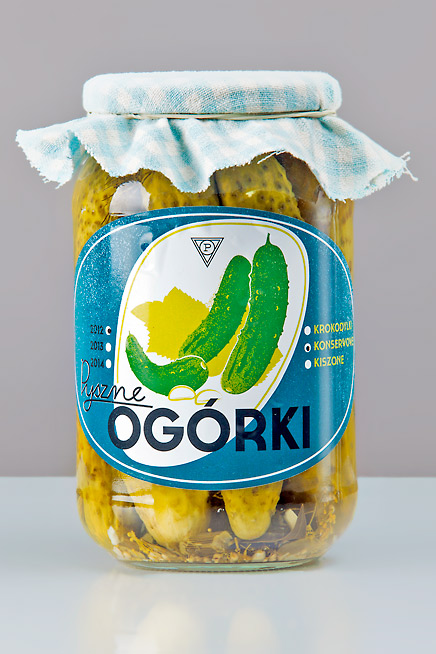
'Frykasy' is a Polish word for 'goodies', 'deli', 'sweets'. 'Polskie Frykasy' come from Wrocław and are souvenirs from Poland made for travellers-foodies :) In colorful packages you'll find traditional sweet tastes of Poland: gooseberries in chocolate, apples in chocolate and cinnamon (most popular in autumn!), aronia berries in chocolate, rowanberries in chocolate, milky cream fudge, different kinds of honey and preserves. You can buy them in supermarkets, 'Empik' shops and here: folkstar.pl Bon appetit!
Oct 8, 2012
Hołubiec-step
What about...a little bit of Polish Folklore? Student's Action „Wytnij Hołubca” during the Polish National Dance Day
7th October – this date will definitely go down in history
For the second time Polish students tried to teach people how to make a
HOŁUBIEC STEP – a Polish national dance step. It is supposed to express
joy and happiness. What's the aim of the action? - We want to show
people that the is nothing to be ashamed of! On the contrary, The Polish
Foklore is very representative and we should popularize this type of
culture since it's deeply rooted in our tradition. We mey go even
further! Why not mix folklore with modern forms of artistic expression:
music, dance, design?
Take a look at the short movies screened during the action and see how young Poles mix folklore with electro music :)

7th October – this date will definitely go down in history
For the second time Polish students tried to teach people how to make a
HOŁUBIEC STEP – a Polish national dance step. It is supposed to express
joy and happiness. What's the aim of the action? - We want to show
people that the is nothing to be ashamed of! On the contrary, The Polish
Foklore is very representative and we should popularize this type of
culture since it's deeply rooted in our tradition. We mey go even
further! Why not mix folklore with modern forms of artistic expression:
music, dance, design?Take a look at the short movies screened during the action and see how young Poles mix folklore with electro music :)
Guess where this film has been made!
Hołubiec in Warsaw with a song of Monika Brodka, well known Polish singer.
A video from Olsztyn

Sep 20, 2012
Something for dog lovers
It's nothing unusual that dogs are very popular pets in Poland. But there are only five breeds that originate from Poland. One of them is Polish Tatra Sheepdog, known also as 'Owczarek Podhalanski' and the 'Polish Mountain Sheepdog'. In other countries, like USA, the Polish Tatra Sheepdog is considered as a rare breed. It comes from Podhale, in the Tatra Mountain area of Poland and its live goal is to protect livestock :) It's an ideal dog for this task, cause Tatra Sheepdogs are great protection dogs and also good companion. They are 'family' dogs. They are not attackers, they rather move threats away, but, however, they may become aggresive when something bad is happening to "their" family. They have very loud bark and they look awesome! Have a look:
| This dog lives in Tatra Mountains in Chochołowska Valley, near Zakopane |
Sep 8, 2012
You haven't been standing here!
"You haven't been standing here, sir!!!" were the most popular words in Poland during the communism time. In Polish they sound "Pan tu nie stał!!!" and they were used to express the frustration connected with somebody else taking a place in a looong queue to the shop. Sounds strange? It was a pretty normal situation in every place in Poland 40-50 years ago. Under the communist rule, shops were constantly running out of products. Shop supplies weren't sufficient for peoples' needs and people were living in constant lack of something, for example toilet paper, soap, ham, chocolate etc. Even basic products like those were almost impossible to get. That's why gigantic queues were formed in front of the shops. When the goods were delivered, everybody wanted to get some. But unfortunately it was always not enough to please everybody... That's why words "Pan tu nie stał!" became so legendary, everyone was fighting for a place in the queue.
There is a shop called "Pan tu nie stał" (shop online or in Łódź on Kilińskiego street) selling clothes and home accessories bringing back "sweet memories" from that period in Polish history. The graphics used on the t-shirts are old fashioned and most of them is originally from the PRL time (that's how we call the communist period in Poland). Have a look:
![]() |
| "Cześć" is a word for "Hi" in Polish. |
![]() |
| T-shirt with a graphic of a traditional Polish dinner served in milk bars |
![]() |
| A mug from a Polish milk bar. It was popular also in Polish homes. |
![]() |
| A queue to the butcher's in 70's in Poland |
Sep 7, 2012
What on earth is 'Oscypek'???
'Oscypek', pronounced something like 'Oh-stzee-peck', is traditional Polish smoked cheese, made of salted sheep milk. It is produced especially in Tatra Mountains in the very south of Poland. In 2007 'Oscypek' became a protected trade name under the EU's Protected Designation of Origin geographical indication. There are some strict regulations which you have to follow if you want to produce delicious 'oscypek', for example:
To buy the best 'oscypek' you have to visit southern areas of Poland (which are stunningly beautiful!), for example: Zakopane (amazing town under the highest mountains in Poland), Kraków (very popular city, which used to be a capital of Poland many, many years ago), Nowy Targ (a place where every week a big market takes place) or Bukowina Tatrzańska.
- cow milk can be mixed with sheep milk, but there musn't be more cow milk than 40% of all the milk used
- cheese can be produced only from May to September and sold until the end of October
- 'oscypek' should weigh between 60 and 80 dag and be 17 - 23 cm long...
To buy the best 'oscypek' you have to visit southern areas of Poland (which are stunningly beautiful!), for example: Zakopane (amazing town under the highest mountains in Poland), Kraków (very popular city, which used to be a capital of Poland many, many years ago), Nowy Targ (a place where every week a big market takes place) or Bukowina Tatrzańska.
| Traditional 'oscypek' source of the photo |
![]() |
| Many kinds of smoked cheese are sold on Krupówki, famous market street in Zakopane source of the photo |
Sep 4, 2012
Poland celebrates the International Day of Chocolate!
Sunny summer is coming to an end so it is good to make your life sweeter. That's why the International Day of Chocolate was invented. On this particular day, on De Gaulle Rondabout (this one with a famous palm) cups of delicious milk chocolate are served to the pedestrians.
To celebrate the Day of Chocolate you should visit one of the E.Wedel shops. E.Wedel is the oldest Polish confectionery. Founded by Karol Ernest Wedel in 1851 it produces variety of high-quality chocolate. It's the most popular chocolate in Poland. But not only chocolate is the Wedel's speciality. You must try also "Ptasie Mleczko" - chocolate covered marshmallow; "Mieszanka Wedlowska" - assorted chocolate covered candy; "Torcik Wedlowski" - a large, circular, chocolate covered wafer with hand-made decorations and "Pawełek" - chocolate bar with a flavored filling that contains a small amount of alcohol.
You can make a trip to see the chocolate factory in Warsaw in Kamionek district. It is located on Prague on Zamoyskiego Street no. 7. Here you can check E.Wedel shops around Poland: http://www.wedelpijalnie.pl/pl/lokale
To celebrate the Day of Chocolate you should visit one of the E.Wedel shops. E.Wedel is the oldest Polish confectionery. Founded by Karol Ernest Wedel in 1851 it produces variety of high-quality chocolate. It's the most popular chocolate in Poland. But not only chocolate is the Wedel's speciality. You must try also "Ptasie Mleczko" - chocolate covered marshmallow; "Mieszanka Wedlowska" - assorted chocolate covered candy; "Torcik Wedlowski" - a large, circular, chocolate covered wafer with hand-made decorations and "Pawełek" - chocolate bar with a flavored filling that contains a small amount of alcohol.
![]() |
| On De Gaulle roundabout in Warsaw there is a palm made of chocolate! |
![]() |
| The chocolate is served to the pedestrians by E.Wedel |
![]() | |||||||
| Enjoy :) |
Sep 3, 2012
Spiderman in Warsaw!
It may sound crazy, but while hanging out in Warsaw you can see a Spiderman. Even if he's not saving the city from the bad guys, he's still pretty amazing. He appears on the streets from time to time joking around and making people laugh. The police seems to treat him as a one of the city characters and punishes him only when it is completely necessary. Have a look at this short video:
Lately, he has been seen on Bankowy Square, sticked to the tram no.20 :D
![]() |
| Photo taken from: www.kontakt24.pl |
Aug 28, 2012
Something about Łódź
It is often said that Łódź is an uglier sister of Warsaw. I can agree that they are related somehow, but I'd never say that Łódź is the ugly one. Even if it's only 135 km (84 mi) away from Warsaw, it is far different from the capital of Poland - and this is what makes her worth sightseeing.
Łodź has left her brightest times in the past - it used to be one of the biggest manufacture centres in Poland. Giant factories were everywhere, not much of them have survived. Łódź was focused on the textile industry, it was even called a 'Polish Manchester'. By the time right before the World War I Łódź had become one of the most densely populated industrial cities in the world! The textile industry declined dramatically in 1990 and 1991. However, countless small companies still provide a significant output of textiles and old factories are being turned into galleries, cinemas, theatres and culture centres. The alternative culture is growing there very quickly - you can observe it on the streets, on the walls of buildings, in cafes and pubs... everywhere.
During the World War II, Łódź was captured by Germans. Soon the Nazi authorities set up the Łódź Ghetto in the city and populated it with more than 200,000 Jews from the Łódź area (approximately 900 people survived the liquidation of the ghetto in August 1944).
These days, history is still alive in Łódź. There are many beautiful old buildings, especially tenement houses still waiting to be renovated. They seem to be ruined, but they still have something eye-catching. So, what Łódź has to offer?
Piotrkowska street: is the main artery and attraction stretching north to south for a little over 5 km, making it (one of) the longest commercial streets in the world. A few of the building fronts have been renovated and date back to the 19th century.
Łagiewniki: you can get close to nature in this largest city park in Europe. Actually, you can say that it is an urban forest! You can ride a bike there, rent a paddleboat, sightsee old chapels and enjoy the nature.
The 'Poznański' Palace: is known as a Louvre in Łódź and it became a City of Łódź History Museum with many events taking place there.
Manufaktura: it used to be a giant factory, right now it is a multicultural centre of spending free time in shops, restaurants, clubs, cinema and museum.
M2: it is a museum of Polish contemporary art. It has got a wide collection of Polish most important avantgarde artists. There are plenty of museums and galleries in Łódź!
Film School: Łódź is also a national film centre. It has got the most famous film school in Poland. Scenes of David Lynch's 2006 film 'Inland Empire' were shot in Łódź :)
Check out a great map of Łódź here: http://www.use-it-lodz.pl/
And finally, how to get there? Very simple! There are plenty of trains going from Warsaw Central Station. All journey by train takes only 2 hours. Check the timetible here: http://test2012.rozklad-pkp.pl/bin/query.exe/en?
Łodź has left her brightest times in the past - it used to be one of the biggest manufacture centres in Poland. Giant factories were everywhere, not much of them have survived. Łódź was focused on the textile industry, it was even called a 'Polish Manchester'. By the time right before the World War I Łódź had become one of the most densely populated industrial cities in the world! The textile industry declined dramatically in 1990 and 1991. However, countless small companies still provide a significant output of textiles and old factories are being turned into galleries, cinemas, theatres and culture centres. The alternative culture is growing there very quickly - you can observe it on the streets, on the walls of buildings, in cafes and pubs... everywhere.
During the World War II, Łódź was captured by Germans. Soon the Nazi authorities set up the Łódź Ghetto in the city and populated it with more than 200,000 Jews from the Łódź area (approximately 900 people survived the liquidation of the ghetto in August 1944).
These days, history is still alive in Łódź. There are many beautiful old buildings, especially tenement houses still waiting to be renovated. They seem to be ruined, but they still have something eye-catching. So, what Łódź has to offer?
Piotrkowska street: is the main artery and attraction stretching north to south for a little over 5 km, making it (one of) the longest commercial streets in the world. A few of the building fronts have been renovated and date back to the 19th century.
Łagiewniki: you can get close to nature in this largest city park in Europe. Actually, you can say that it is an urban forest! You can ride a bike there, rent a paddleboat, sightsee old chapels and enjoy the nature.
The 'Poznański' Palace: is known as a Louvre in Łódź and it became a City of Łódź History Museum with many events taking place there.
Manufaktura: it used to be a giant factory, right now it is a multicultural centre of spending free time in shops, restaurants, clubs, cinema and museum.
M2: it is a museum of Polish contemporary art. It has got a wide collection of Polish most important avantgarde artists. There are plenty of museums and galleries in Łódź!
Film School: Łódź is also a national film centre. It has got the most famous film school in Poland. Scenes of David Lynch's 2006 film 'Inland Empire' were shot in Łódź :)
Check out a great map of Łódź here: http://www.use-it-lodz.pl/
And finally, how to get there? Very simple! There are plenty of trains going from Warsaw Central Station. All journey by train takes only 2 hours. Check the timetible here: http://test2012.rozklad-pkp.pl/bin/query.exe/en?
| All the details are important in Łódź |
| 'Wolności' Square (the Square of Freedom) |
| Buildings of Łódź |
| Giant mural next to the Piotrkowska street |
| The details of Manufaktura |
| Cafe 'Wolność' ('Freedom' cafe) |
Jul 12, 2012
Jun 7, 2012
Desert in Poland
For those
who didn’t know – yes, we’ve got a desert in Poland! It’s located in the north
of Poland, between Rowy and Łeba - two
little seaside towns. The towns are very picturesque and peaceful, but don’t visit
them in high season, otherwise the only thing you’ll see will be the crowd of
tourists.
The desert is very unusual, cause it consists of the ‘moving dunes’. As waves and wind carry sand inland, the dunes slowly move, at a speed of 3 to 10 meters per year. Some dunes are quite high - up to 30 meters. The ‘moving dunes’ are regarded as a curiosity of nature on a European scale! To see it with your own eyes, go for a trip to Słowiński National Park. The highest peak of the Park – Rowokol (115 meters above sea level) – is also an excellent observation point :) You'll see not onlu the biggest amount of sand ever, but also Łebsko lake, which surrounds the dunes from the southern side.
What else? In the park you can sightsee the original German airborne rocket launcher from II World War; the old Kashebian village named Kluki... And after all this - take a long sunbath at the sandy beaches of the Baltic Sea coast :)
How to get there?
By bus: Take POLSKI BUS to Gdańsk. Then catch a train to Lębork. From Lębork, there are buses to Łeba (5 pln, all day long). This is a very good connection all year long.
By train: There are trains both to Łeba and Lębork. Most of thyem are during the night. However, many of them are only during the high season. When you travel different time than summer - check your train on www.pkp.pl.
Click here to read some more and check out a map of the area
The desert is very unusual, cause it consists of the ‘moving dunes’. As waves and wind carry sand inland, the dunes slowly move, at a speed of 3 to 10 meters per year. Some dunes are quite high - up to 30 meters. The ‘moving dunes’ are regarded as a curiosity of nature on a European scale! To see it with your own eyes, go for a trip to Słowiński National Park. The highest peak of the Park – Rowokol (115 meters above sea level) – is also an excellent observation point :) You'll see not onlu the biggest amount of sand ever, but also Łebsko lake, which surrounds the dunes from the southern side.
What else? In the park you can sightsee the original German airborne rocket launcher from II World War; the old Kashebian village named Kluki... And after all this - take a long sunbath at the sandy beaches of the Baltic Sea coast :)
How to get there?
By bus: Take POLSKI BUS to Gdańsk. Then catch a train to Lębork. From Lębork, there are buses to Łeba (5 pln, all day long). This is a very good connection all year long.
By train: There are trains both to Łeba and Lębork. Most of thyem are during the night. However, many of them are only during the high season. When you travel different time than summer - check your train on www.pkp.pl.
Click here to read some more and check out a map of the area
![]() |
| The moving dunes in Słowiński National Park fot. M. Danielak |
![]() |
| Beautiful, isn't it? fot. M. Danielak |
| Beach in Łeba |
Subscribe to:
Posts (Atom)